
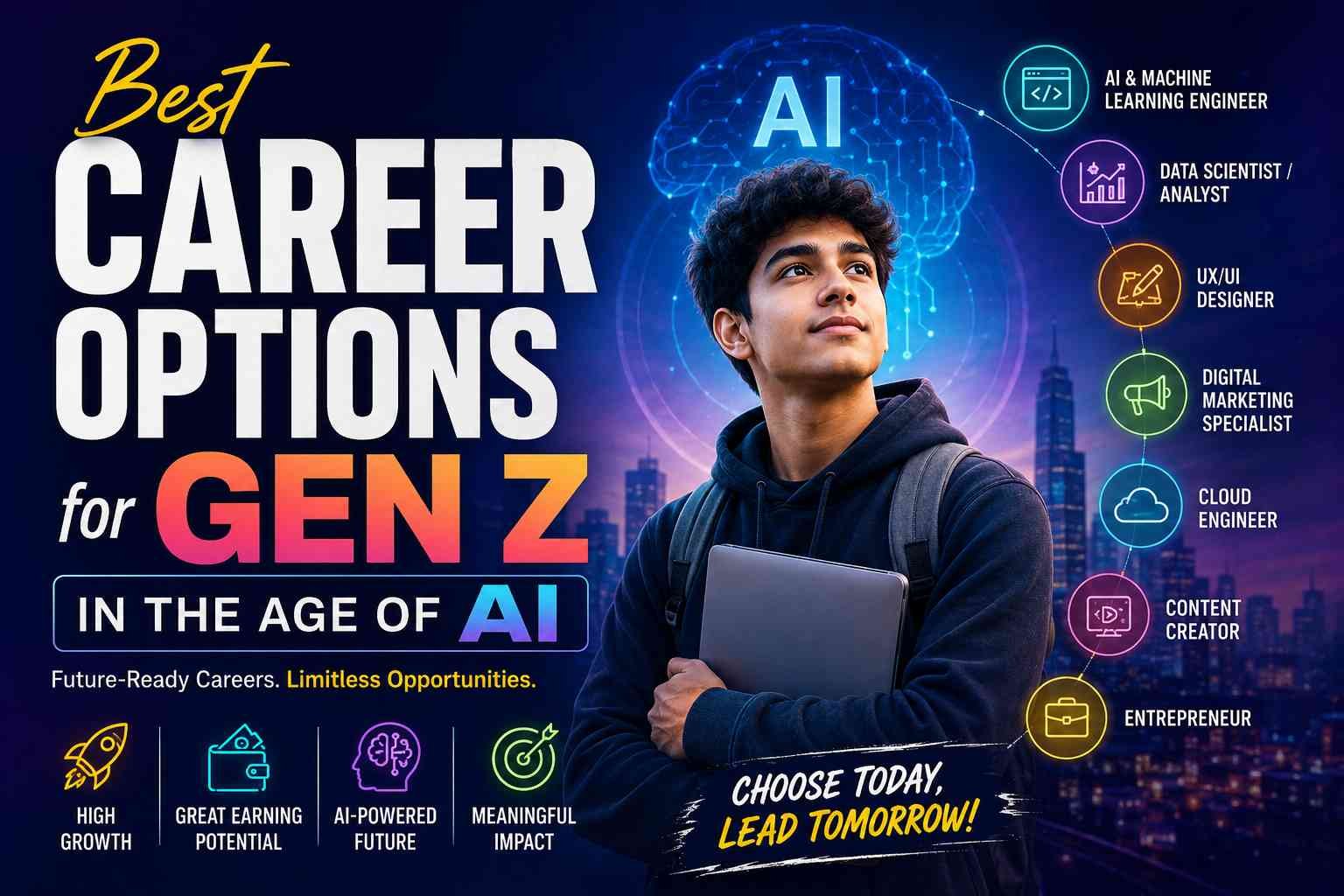
Why Choosing the Right Career in the Age of AI Matters for Gen Z
The Shift from Traditional Roles to AI-Augmented Work
In 2026, the job market is undergoing its most profound structural shift since the dawn of the internet. Generative AI, machine learning agents, and robotics are not simply automating repetitive tasks; they are redefining what value means in the workforce. For Gen Z, entry-level corporate paths look radically different. The traditional “learn by doing basic administrative work for two years” model has eroded, replaced by roles that demand immediate critical thinking, strategic oversight, and human-centric skills.
The Rise of “Human-in-the-Loop” Occupations
While AI excels at pattern recognition, rapid data synthesis, and automated drafting, it lacks emotional intelligence, ethical judgment, physical adaptability, and true creative vision. The most lucrative and resilient career paths for Gen Z in the age of AI are “human-in-the-loop” roles—positions where professionals either leverage AI to amplify their strategic output or work in domains where human presence, empathy, and physical dexterity are irreplaceable.
Why Gen Z Is Uniquely Positioned to Thrive
As true digital natives, Gen Z possesses an inherent advantage: an intuitive adaptability to new tech interfaces. Instead of fearing AI displacement, young professionals who treat AI tools as co-pilots—combining technical fluency with deep human connection—are positioning themselves for rapid career progression and high earning potential.
1. AI Product Manager
What Does an AI Product Manager Do?
AI Product Managers sit at the intersection of machine learning engineering, user experience, and business strategy. They define what AI-powered features or standalone software products should be built, ensuring that complex algorithms translate into practical tools that solve real human problems.
Why This Career Is Thriving in the Age of AI
While AI can generate code and train models, it cannot determine market demand, understand human frustration, or make strategic trade-offs between cost, privacy, and user experience. AI Product Managers provide the direction and human purpose behind technology investments.
Key Skills Required
Product lifecycle management, basic machine learning concepts, user research, data analytics, and cross-functional leadership.
Realistic Earning Potential
$95,000 to $165,000 annually for mid-level roles; entry-level associate paths start around $75,000 to $105,000.
2. Cybersecurity & AI Risk Analyst
What Does a Cybersecurity & AI Risk Analyst Do?
Cybersecurity specialists protect corporate networks, user data, and cloud systems from unauthorized access, cyber threats, and security vulnerabilities. AI Risk Analysts specifically audit algorithms for data leaks, prompt injection attacks, and privacy compliance.
Why This Career Is Thriving in the Age of AI
As cyber threats become automated and AI systems handle sensitive corporate data, security risks have multiplied exponentialy. Companies pay premium salaries to professionals who can defend cloud infrastructure, build zero-trust security architectures, and perform ethical hacking audits.
Key Skills Required
Network security, penetration testing, Python scripting, threat modeling, and regulatory compliance knowledge (GDPR, EU AI Act).
Realistic Earning Potential
$85,000 to $155,000 annually, with a persistent global talent shortage driving strong job security.
3. Machine Learning Operations (MLOps) Engineer
What Does an MLOps Engineer Do?
MLOps Engineers manage the production infrastructure required to run machine learning models reliably at scale. They build automated pipelines for model training, monitoring, testing, deployment, and data versioning.
Why This Career Is Thriving in the Age of AI
Building an AI model in a lab is only 10% of the battle; keeping it running efficiently in production without software crashes or data drift is the hard part. MLOps engineers are the unsung infrastructure architects behind modern AI tools.
Core Tools & Technologies
Docker, Kubernetes, Python, AWS SageMaker, MLflow, and CI/CD automation pipelines.
Realistic Earning Potential
$110,000 to $180,000 annually due to high technical complexity and scarce talent pools.
4. Clinical Healthcare Professional (Telehealth & Medical Tech)
What Does a Clinical Healthcare Professional Do?
Clinical healthcare professionals—including specialized nurses, physician assistants, physical therapists, and diagnostic technicians—provide direct hands-on medical care, patient diagnosis, emergency response, and emotional support.
Why This Career Is Thriving in the Age of AI
Healthcare is one of the most AI-resistant sectors in existence. While AI tools assist with diagnostic imaging, predictive vitals monitoring, and medical record transcription, physical care, bedside manner, and critical clinical decisions remain strictly human duties.
Key Skills Required
Clinical diagnostic training, patient care, medical technology operation, empathy, and crisis intervention.
Realistic Earning Potential
$75,000 to $130,000+ annually, varying by clinical specialization and geographic region.
5. AI Ethics, Bias & Governance Specialist
What Does an AI Ethics Specialist Do?
AI Ethics Specialists evaluate machine learning systems for algorithmic bias, hallucination risks, privacy violations, and societal harm. They draft corporate governance frameworks to ensure AI models are developed responsibly and comply with global laws.
Why This Career Is Thriving in the Age of AI
Enterprises face massive legal, brand, and regulatory risks if their deployed AI models exhibit discriminatory behavior or leak proprietary data. Ethicists provide the moral and legal oversight essential for corporate risk management.
Key Skills Required
Legal analysis, policy drafting, philosophy, qualitative research, and a strong foundational understanding of AI capabilities.
Realistic Earning Potential
$80,000 to $145,000 annually across corporate, government, and policy research sectors.
6. Renewable Energy & Climate Systems Engineer
What Does a Renewable Energy Engineer Do?
Renewable Energy Engineers design, build, and optimize clean energy infrastructure—including solar arrays, wind turbine farms, battery storage grids, and smart grid software systems.
Why This Career Is Thriving in the Age of AI
The explosive computing demands of global AI data centers require unprecedented amounts of electricity. Clean energy engineers are essential for building sustainable power solutions to fuel this massive technological expansion without derailing climate targets.
Core Tools & Technologies
Electrical engineering principles, CAD software, energy modeling tools, and smart-grid automation technology.
Realistic Earning Potential
$80,000 to $140,000 annually in a rapidly expanding global green economy.
7. Human Resources & People Experience Strategist
What Does a People Experience Strategist Do?
People Strategists oversee organizational culture, talent acquisition, employee retention, leadership development, and workplace wellness in modern, hybrid corporate environments.
Why This Career Is Thriving in the Age of AI
As workplace automation accelerates, navigating organizational change, managing remote team dynamics, resolving workplace conflict, and fostering human connection require deep emotional intelligence that no software can replicate.
Key Skills Required
Conflict resolution, organizational psychology, change management, empathetic communication, and talent development.
Realistic Earning Potential
$70,000 to $125,000 annually.
8. Creative Director & Brand Strategist
What Does a Creative Director Do?
Creative Directors guide the overall visual aesthetic, narrative voice, and emotional resonance of brand campaigns, multi-media content, product launches, and digital storytelling.
Why This Career Is Thriving in the Age of AI
Generative AI can create millions of stock images and generic copy blocks in seconds, saturating the market with commoditized content. High-level human vision, cultural commentary, original taste, and brand positioning are required to cut through the digital noise.
Key Skills Required
Brand positioning, visual storytelling, creative strategy, team management, and audience psychology.
Realistic Earning Potential
$85,000 to $160,000+ annually for agency and in-house enterprise creative leads.
9. Robotics & Mechatronics Technician
What Does a Robotics Technician Do?
Robotics Technicians design, install, calibrate, repair, and maintain automated physical systems, robotic arms, autonomous warehouse vehicles, and smart manufacturing hardware.
Why This Career Is Thriving in the Age of AI
As AI software integrates into physical machinery across logistics, agriculture, and manufacturing, skilled technicians are urgently required on-site to build, troubleshoot, and repair physical hardware when systems fail.
Core Tools & Technologies
PLC programming, microcontrollers, hydraulic and pneumatic systems, electrical diagnostic equipment, and CAD.
Realistic Earning Potential
$65,000 to $110,000 annually, offering high-wage entry points without requiring a four-year university degree.
10. Mental Health Therapist & Behavioral Counselor
What Does a Mental Health Therapist Do?
Therapists and counselors diagnose and treat mental health conditions, providing psychological counseling, cognitive behavioral therapy, trauma support, and personal development coaching.
Why This Career Is Thriving in the Age of AI
Therapy relies entirely on human trust, non-verbal intuition, shared lived experiences, and psychological safety. AI chatbots can provide basic wellness prompts, but complex trauma recovery and emotional healing require dedicated human practitioners.
Key Skills Required
Active listening, clinical psychology, empathy, non-verbal interpretation, and ethical judgment.
Realistic Earning Potential
$60,000 to $120,000 annually in private practice or healthcare organizational settings.
11. Modern Skilled Trades (Electricians, HVAC & Smart Systems Specialists)
What Do Modern Trade Specialists Do?
Electricians, HVAC mechanics, and smart-home technicians install, diagnose, and maintain electrical grids, climate control equipment, and automated building management hardware in real-world environments.
Why This Career Is Thriving in the Age of AI
Skilled trades represent one of the most AI-proof and physical-automation-resistant career categories in the modern economy. Diagnosing complex physical problems in unpredictable residential or commercial environments requires hands-on problem solving that software cannot touch.
Key Skills Required
Electrical theory, blueprint reading, spatial reasoning, safety compliance, and hands-on diagnostic troubleshooting.
Realistic Earning Potential
$60,000 to $115,000+ annually, with master tradespeople and business owners earning significantly more.
12. Data Privacy & Tech Policy Attorney
What Does a Tech Policy Attorney Do?
Tech Policy and Data Privacy Lawyers navigate copyright litigation, algorithmic regulation, intellectual property claims, international data transfer compliance, and enterprise AI usage laws.
Why This Career Is Thriving in the Age of AI
The rapid evolution of generative AI has created unprecedented legal grey areas around copyright, data consent, and corporate liability. Legal professionals who specialize in emerging technology governance are essential for risk mitigation.
Key Skills Required
Statutory analysis, legal writing, intellectual property law, tech policy expertise, and negotiation.
Realistic Earning Potential
$110,000 to $200,000+ annually across corporate law firms and tech enterprise legal teams.
13. Environmental & Sustainability Consultant
What Does a Sustainability Consultant Do?
Sustainability Consultants advise corporations, real estate developers, and government agencies on environmental impact strategies, carbon footprint reduction, supply chain ethics, and regulatory ESG reporting.
Why This Career Is Thriving in the Age of AI
Global regulations and consumer demands require businesses to prove environmental accountability. Consultants evaluate real-world supply chains, conduct field audits, and craft comprehensive sustainability frameworks.
Key Skills Required
Environmental science, regulatory compliance auditing, supply chain analysis, and corporate reporting.
Realistic Earning Potential
$70,000 to $130,000 annually.
14. Specialized Instructional Designer & AI Educator
What Does an AI Instructional Designer Do?
Instructional Designers build adaptive learning curricula, educational programs, corporate upskilling courses, and interactive training modules designed to help employees and students master new technologies.
Why This Career Is Thriving in the Age of AI
As technological advancements alter industry standards every few months, continuous workforce retraining is mandatory. Instructional designers translate complex technical advances into digestible, human-centered learning pathways.
Key Skills Required
Curriculum development, educational psychology, e-learning platform architecture, and instructional technology.
Realistic Earning Potential
$65,000 to $115,000 annually across university, corporate, and EdTech settings.
15. Enterprise B2B Solutions Architect
What Does a Solutions Architect Do?
Solutions Architects analyze complex business operations and design custom technical software systems, cloud configurations, and automated enterprise workflows to solve high-stakes operational bottlenecks.
Why This Career Is Thriving in the Age of AI
No two enterprise corporations operate on the exact same legacy tech stack. Solutions Architects combine high-level technical coding knowledge with business consulting to create tailored infrastructure integrations.
Core Tools & Technologies
Cloud architecture (AWS/Azure), enterprise API design, system integration, and technical consultation.
Realistic Earning Potential
$120,000 to $195,000 annually.
How Gen Z Can Build an AI-Resilient Career Strategy
Cultivate Hybrid Competencies (Tech + Human Skill)
The most resilient professionals do not specialize solely in pure technical execution or pure soft skills—they bridge the gap. Combining technical literacy (understanding how AI algorithms work) with deep human capabilities (persuasion, empathy, physical craft) creates an unbeatable career moat.
Shift Focus From “Task Execution” to “Problem Framing”
If your daily work consists entirely of following static, step-by-step instructions, it is vulnerable to automation. Focus on developing skills in high-level problem framing: identifying what problems actually matter, asking the right strategic questions, and validating results.
Prioritize Continuous Upskilling and Proof of Work
Treat learning as a lifelong habit rather than something finished at graduation. Build a public portfolio demonstrating your projects, published case studies, code repositories, or operational workflows to provide indisputable proof of your value to future employers.
Frequently Asked Questions
Will AI Make Entry-Level Jobs Obsolete for Gen Z?
AI is eliminating routine administrative tasks historically assigned to juniors, but it is creating demand for “augmented entry-level” roles. Employers increasingly seek junior professionals who can manage AI tools to deliver mid-level output on day one.
Should Gen Z Still Pursue Computer Science or Software Engineering Degrees?
Yes, but the focus must shift. Pure syntax coding is largely automated by AI assistants. Modern software engineers must focus on system architecture, cybersecurity, cloud infrastructure, and solving real-world business problems rather than basic boilerplate code writing.
What Fields Are Most Safe From AI Disruption?
Fields that require physical dexterity in unpredictable environments (skilled trades, robotics maintenance), deep emotional trust and care (healthcare, therapy), and high-stakes legal/ethical accountability remain the most resistant to full automation.
How Important Is AI Fluency for Non-Technical Careers?
AI fluency is becoming as fundamental as basic computer literacy. Regardless of whether you work in marketing, human resources, design, or business management, knowing how to leverage AI productivity tools to accelerate your workflow is expected across almost every modern workplace.
[…] competitive requires adopting cutting-edge productivity solutions and exploring modern career options in the age of AI. Adapting early ensures job security, higher efficiency, and continuous professional […]
[…] guide combines the deep journey of finding yourself in your 20s with sustainable strategies for self improvement for Gen Z, ensuring you build lasting identity, true confidence, and true purpose without falling into the […]
[…] most connected generation online, many young adults experience real social isolation. Understanding Gen Z social life involves balancing online networks with offline presence, setting healthy emotional borders, and […]
[…] you are seeking budget-friendly micro-adventures or epic bucket-list journeys, exploring curated adventure ideas for Gen Z provides the perfect roadmap to broaden your perspective and cultivate deep confidence. In this […]
[…] we explore practical strategies, safety protocols, and actionable mindset shifts to help you master solo travel in your 20s, ensuring your inaugural journey is smooth, memorable, and profoundly […]