
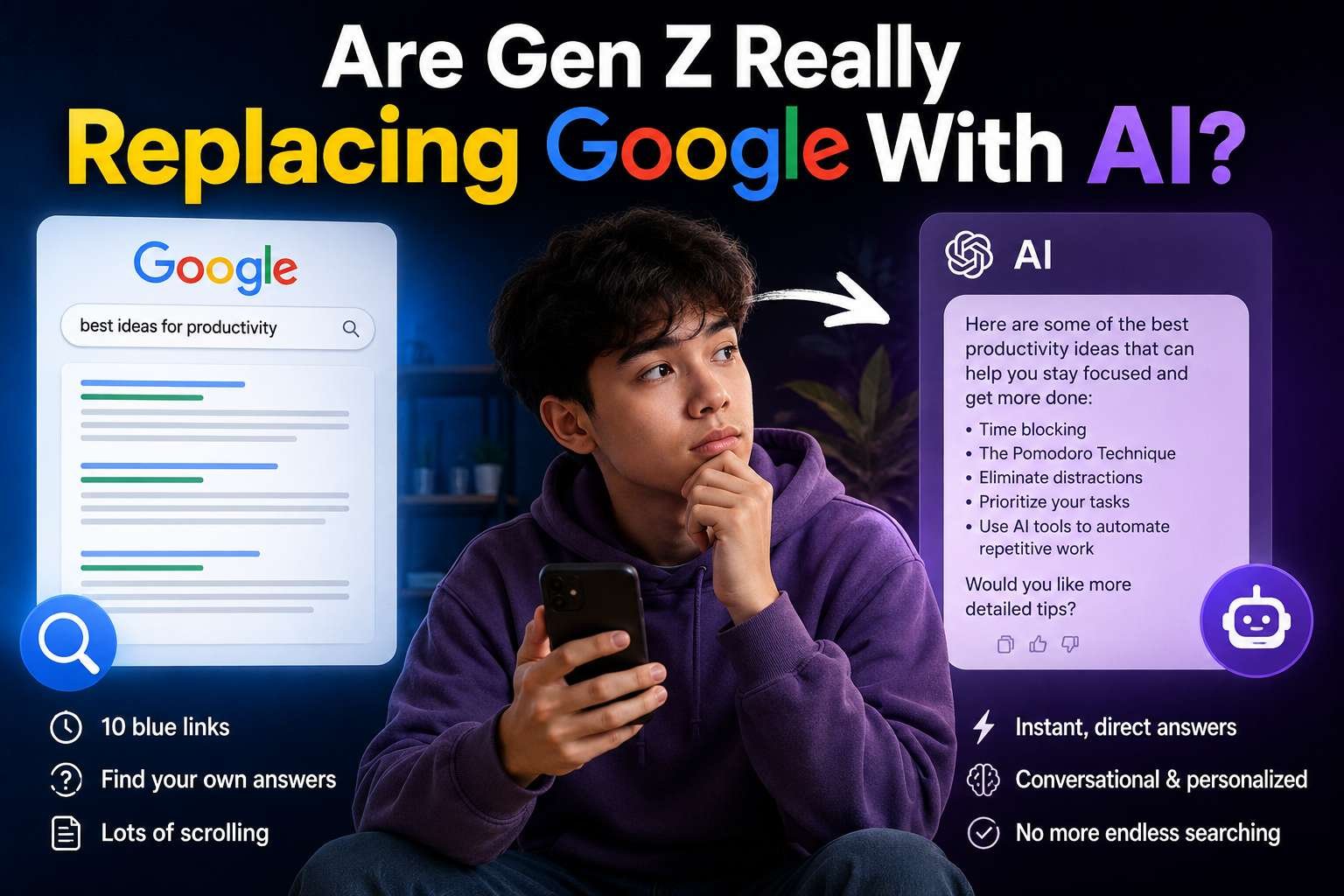
Understanding the Shift in Gen Z Search Preferences
The traditional dominance of standard search engines is facing an unprecedented transformation driven by Gen Z. Younger consumers are increasingly turning away from blue links in favor of direct, conversational, and hyper-personalized discovery tools. This demographic prioritizes speed, context, and immediate satisfaction over digging through pages of search results filled with intrusive ad placements. As highlighted across Gen Z Generations, younger generations are redefining how information, products, and services are discovered online, forcing marketers to completely re-evaluate their organic visibility strategies in a rapidly changing digital landscape.
The Move From Keywords to Natural Conversations
Gen Z interacts with digital search engines through organic, conversational dialogue rather than rigid keyword strings. Instead of searching for fragmented terms, younger users ask full questions and describe complex scenarios to get context-aware answers immediately. This transition reduces friction, allowing individuals to refine their prompts dynamically without restarting their search from scratch every single time. It completely changes how users discover solutions to real-world challenges.
Why Speed and Context Matter More Than Ever
Modern internet users value immediate context and tailored output above raw information volume. Sorting through promotional blog posts or ad-heavy website listings creates unnecessary friction. Conversational interfaces synthesize vast amounts of web data into instant, relevant answers, helping users quickly make informed decisions, summarize complex topics, and solve specific everyday problems without delay. Speed is no longer a luxury; it is a fundamental requirement for online discovery.
The Evolution of AI Shopping and Consumer Behavior
Online shopping is undergoing a structural transformation as young consumers adopt interactive platforms to research and buy products. The rise of AI shopping assistant tools enables automated discovery, price comparisons, and personalized product curations tailored directly to an individual’s lifestyle. Rather than scrolling through endless e-commerce category pages, shoppers interact with intelligent algorithms that curate custom collections based on subtle preferences, drastically shortening the path from initial brand awareness to final checkout.
How Intelligent Assistants Streamline Product Research
Finding the right product historically required opening dozens of browser tabs to evaluate reviews, specifications, and pricing dynamics. Intelligent assistants eliminate this manual process by aggregating consumer feedback, evaluating feature specifications, and presenting concise comparison summaries. Users receive quick, highly tailored insights that highlight exact pros and cons relevant to their specific purchasing criteria without spending hours manually sifting through raw user reviews.
The Death of Traditional E-Commerce Search Filters
Static drop-down filters and basic keyword search bars are rapidly becoming obsolete for tech-savvy shoppers. Modern consumers prefer describing intent, budget, style, and functional constraints in plain text. Smart platforms interpret these nuanced demands directly, bypassing generic inventory listings to present hyper-specific product options that match exact user requests effortlessly. This shift creates a vastly superior and far more intuitive user shopping experience overall.
How Personalization Drives AI Product Recommendations
Hyper-personalized curation has redefined customer expectations across retail environments. Modern consumer tools utilize predictive modeling to offer precise AI product recommendations tailored to unique tastes, past behavior, and live conversational context. By analyzing real-time intent rather than static demographic data, modern algorithms deliver tailored product suggestions that feel genuinely curated by a trusted personal shopper rather than a generic promotional engine.
Algorithmic Context Over Static Demographics
Traditional recommendation engines rely heavily on broad age groups or location categories, often missing exact user preferences. Modern algorithms focus on real-time conversational intent, past interaction context, and specific constraints. This contextual understanding yields suggestions that align perfectly with the user’s immediate needs, stylistic preferences, and financial expectations. It makes discovering unique personal tools and lifestyle choices far more relevant.
Building Consumer Trust Through Unbiased Curations
Gen Z demands transparency and authenticity when receiving brand recommendations online. Algorithms that provide honest, objective product breakdowns build far stronger brand loyalty than platforms presenting obviously sponsored search ads. When recommendations clearly reflect genuine user requirements rather than paid placements, consumer trust and purchase conversion rates rise significantly across digital e-commerce channels.
Comparing Google Search vs Next-Gen Interactive Platforms
The choice between classic search engines and interactive platforms comes down to how information is retrieved and structured. Standard search engines deliver lists of indexed web pages, requiring users to click through, evaluate credibility, and cross-reference multiple sources manually. Interactive tools, by contrast, act as direct synthesizers, analyzing vast indexes to answer complex queries directly within a unified, interactive interface. This paradigm shift reshapes digital research routines entirely.
Evaluating Search Result Authenticity and Depth
While traditional search engines struggle with sponsored content clutter and search engine optimization gaming, interactive platforms extract core insights directly. However, users must continuously balance synthesis speed against source accuracy. Evaluating link sources, factual accuracy, and underlying algorithms remains vital as these next-generation search ecosystems mature into daily information tools. Learning to evaluate automated outputs is now a crucial modern skill.
The Changing Role of Sponsored Ads in Search
Traditional search engines rely heavily on monetized ad listings placed prominently above organic search findings. Gen Z actively avoids these promotional banners, seeking uncompromised answer clarity. Modern conversational platforms present opportunities for native, non-disruptive discovery, altering how brands must position products within interactive user journeys without relying on aggressive pop-up banners or intrusive paid placements.
The Visual and Social Factor in Gen Z Search Habits
Search behavior among younger demographics is deeply visual, interactive, and community-oriented. Platforms like TikTok, Instagram, and YouTube serve as primary search engines for lifestyle, fashion, food, and travel queries. Whether planning a trip—much like exploring solo travel for Gen Z—or looking for fresh everyday inspiration, blending short-form visual evidence with interactive assistants creates a dynamic research habit where visual proof and conversational answers validate each other seamlessly before a purchase is made.
Short-Form Video as the New Search Result Page
For Gen Z, seeing is believing when researching products or locations. Video-based search results show real people demonstrating products, displaying authentic skin textures, or reviewing places in real-time. This visual validation provides a level of immediate authenticity that static text articles and staged product photos simply cannot replicate in modern consumer decision-making processes.
Integrating Social Proof Into Automated Responses
Combining creator recommendations with intelligent summary engines provides the ultimate decision-making tool. Consumers get structured, written data backed by genuine user-generated content from social platforms. This dual validation model ensures users receive both structured analytical insights and authentic, real-world proof before buying, creating a comprehensive research ecosystem tailored to contemporary youth culture.
How Brands Must Adapt Their Digital Marketing Strategies
As consumer discovery habits shift away from classical keyword queries, digital marketers must rethink traditional Search Engine Optimization (SEO). Optimizing exclusively for web page rankings on traditional search engines is no longer sufficient. To succeed in today’s workforce and digital landscape—much like understanding the best career options for Gen Z in the age of AI or mastering 15 high-income skills Gen Z should learn—brands need to establish visibility within generative answer engines, creator networks, and conversational recommendation systems to remain discoverable to younger, highly engaged target audiences.
Transitioning from Keywords to Answer Engine Optimization
Modern search optimization requires creating direct, comprehensive answers to complex questions rather than targeting isolated keyword metrics. Brands must structure digital assets clearly, utilize structured data schemas, and publish authentic, expert content that information synthesis models can readily extract, understand, and cite as trusted authoritative sources across automated responses.
Leveraging Creator Authenticity in Automated Discovery
Authentic influencer content feeds directly into visual and algorithmic discovery networks. Brands that collaborate with genuine content creators ensure their products naturally surface in user queries across social media and automated summary engines. Authenticity, real-world testing, and community engagement are becoming core components of long-term digital visibility and sustained customer acquisition.
The Technical Future of Web Discovery and E-Commerce
The technical architecture underlying online information retrieval is evolving at an unprecedented pace. Autonomous web agents, multi-modal search models, and real-time data integrations are merging into seamless discovery networks. For anyone building a forward-thinking lifestyle, whether mapping out 50 things every Gen Z should do before turning 30 or diving into the Gen Z adventure guide, the future of e-commerce relies on intelligent systems that understand text, audio, images, and intent simultaneously, creating instant pathways from initial user curiosity to secure transactions.
Multi-Modal Queries and Real-Time Data Integration
Future search frameworks process images, voice notes, and text prompts simultaneously to interpret complex user intent. A user can upload a photo of an outfit, set price parameters via voice, and receive exact product links instantly. Real-time API integrations ensure stock levels and pricing are verified automatically during interactions without manual search steps.
Autonomous Shopping Agents and Direct Transactions
Beyond offering product recommendations, advanced digital assistants are gaining the ability to complete transactions autonomously on behalf of users. By securely saving size profiles, address information, and payment parameters, personal assistants will soon handle negotiations, price tracking, and order placement seamlessly from start to finish with minimal manual user intervention needed.
Is Google Really Losing Its Search Monopoly?
While Gen Z is rapidly adopting alternative discovery channels, traditional search engines remain foundational infrastructure for global web navigation. Rather than completely replacing established platforms, AI-driven tools are creating a fragmented search environment where different tools serve distinct intent profiles. As explored in maintaining a balanced Gen Z lifestyle, the future of digital discovery is a multi-platform landscape where traditional search, social media, and interactive algorithms coexist harmoniously.
The Coexistence of Traditional and Generative Engines
Traditional search engines retain an advantage for high-intent transactional queries, navigational routing, and real-time local business verification. Interactive conversational models excel at qualitative research, creative brainstorming, and curated product discovery. Consumers naturally switch between these technologies depending on the precise nature of their search task and immediate functional goals.
How Legacy Platforms Are Innovating to Retain Users
Established tech giants are heavily integrating direct generative answers into their existing search interface structures. By blending traditional index links with immediate generative summaries, legacy platforms aim to provide the instant clarity modern users demand, preserving their immense global user base in an increasingly competitive technological landscape that demands constant adaptation and evolution.
Frequently Asked Questions
Is Gen Z completely stopping their use of traditional search engines?
No, Gen Z has not completely abandoned traditional search engines. Instead, they use a diversified approach, relying on interactive tools for research and product recommendations, social media for visual proof, and classic engines for quick factual lookups or navigation.
How does AI shopping differ from traditional e-commerce browsing?
Unlike traditional e-commerce browsing which relies on manual searching through categories and filters, interactive shopping tools curate personalized product suggestions based on natural conversational inputs, direct style preferences, and specific budget guidelines.
Why do young consumers trust automated recommendations over search ads?
Younger users tend to distrust sponsored search ads because they prioritize paid placement over relevance. Modern recommendation algorithms analyze objective user intent and authentic social proof, offering more transparent, objective, and tailored options.
What is Answer Engine Optimization (AEO) and why does it matter?
Answer Engine Optimization is the practice of structuring digital content so that automated synthesis models can easily process, extract, and present it as direct answers to user queries, ensuring brand visibility in modern conversational environments.
Can conversational tools accurately provide reliable price comparisons?
Yes, modern discovery tools connect directly to real-time e-commerce APIs and web databases, allowing them to accurately track pricing, check product availability, and present up-to-date deal comparisons across multiple online retailers simultaneously.
How can e-commerce brands optimize for modern discovery platforms?
E-commerce brands can optimize by publishing clear product data, gathering genuine user reviews, creating interactive visual content on social platforms, and structuring website information so synthesis algorithms can digest product specifications effortlessly.
[…] climate or looking for non-comedogenic skincare products for sensitive skin, Gen Z leverages AI product recommendations to pinpoint items that standard retail search filters consistently miss. This shift makes personal […]