
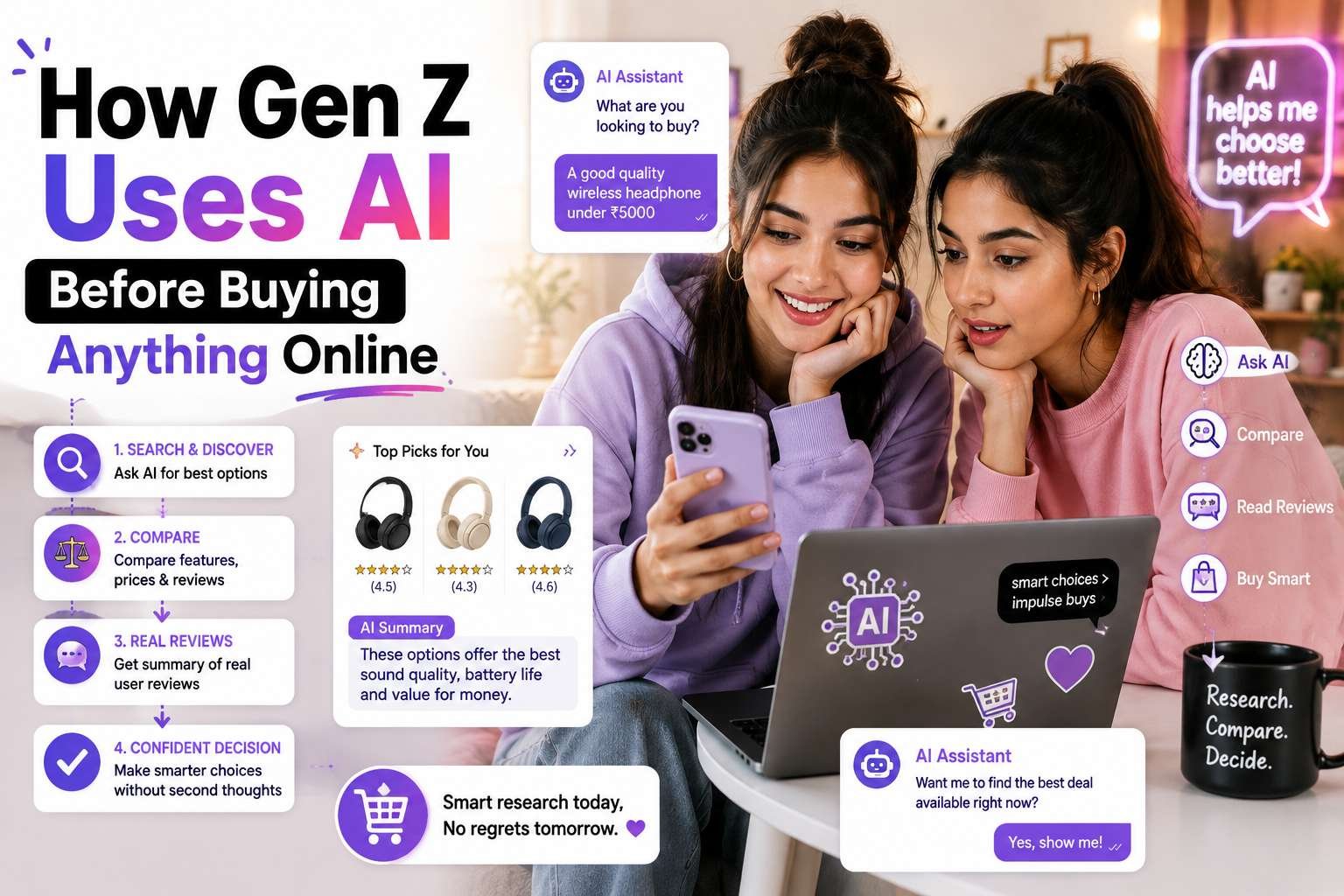
The online buying journey for Gen Z looks drastically different than it did just a few years ago. Rather than beginning with a generic keyword query on traditional search platforms, younger consumers increasingly rely on interactive intelligence tools to guide their decisions. Before handing over credit card details or checking out, Gen Z uses advanced software engines to curate options, summarize real feedback, verify pricing across multiple retailers, and assess value. Understanding this AI-first decision-making process is essential for modern e-commerce brands looking to capture early consideration and drive conversions.
From Static Search Bars to Interactive Buying Consultants
Gen Z treats digital assistants as personal shopping consultants rather than cold indexes. By typing natural prompt descriptions like “find a durable, sustainable waterproof backpack under $80,” users skip generic product pages. Modern platforms parse complex specifications instantly, delivering tailored shortlists that meet exact lifestyle constraints.
Eliminating Information Overload at the Research Stage
Traditional search results present endless tabs, sponsored links, and SEO-optimized blogs that hide authentic insights. Interactive tools digest thousands of customer reviews, forum discussions, and technical specifications into concise pros-and-cons lists within seconds. This capability eliminates research fatigue and gives consumers instant clarity before buying.
Prompt-Based Discovery and Hyper-Targeted Product Curation
Prompt-driven product discovery allows buyers to find item matches based on highly specific real-world scenarios. Whether shopping for a capsule wardrobe tailored to a specific climate or looking for non-comedogenic skincare products for sensitive skin, Gen Z leverages AI product recommendations to pinpoint items that standard retail search filters consistently miss. This shift makes personal relevance the primary filter in modern retail.
Replacing Category Navigation with Natural Language Intent
Navigating through multi-level website category menus is rapidly becoming a thing of the past for digital natives. Shoppers now describe precisely how, where, and when they intend to use a product. Algorithms translate these contextual demands into direct product suggestions, bridging the gap between abstract user needs and catalog inventory effortlessly.
Personalized Curation Powered by Lifestyle Context
Gen Z prefers curation that reflects personal style preferences, sustainability values, and immediate financial budgets. Smart recommendation engines process live conversational feedback to adjust suggestions dynamically. The result is a highly tailored experience that feels more like consulting an expert personal shopper than browsing a traditional online store.
Real-Time Price Comparison and Value Optimization
Price transparency and financial efficiency remain top priorities for Gen Z shoppers. Before making any purchase, younger consumers use automated price-tracking tools and synthesis engines to verify that they are receiving the best market value. Automated systems scan multiple e-commerce stores simultaneously to highlight live sales, historical price trends, and active discount codes, ensuring buyers never overpay for targeted items.
Automating Cross-Retailer Price and Deal Verification
Manually opening multiple retailer sites to compare prices is inefficient for tech-savvy buyers. Automated shopping assistants perform instant price checks across major marketplaces and direct-to-consumer websites. Shoppers receive direct breakdowns comparing final checkout totals, including estimated shipping costs and active promotional vouchers.
evaluating Long-Term Value and Budget Alignment
Beyond upfront list prices, Gen Z uses predictive tools to evaluate long-term value, item durability, and resale potential. When evaluating high-ticket items, consumers prompt algorithms to compare cost-per-wear metrics or analyze overall build quality, ensuring every purchase aligns with their personal budget goals.
Evaluating UGC and Review Synthesis Before Checkout
User-generated content (UGC) and authentic customer reviews heavily influence Gen Z purchasing decisions. However, sorting through hundreds of contradictory customer ratings can be overwhelming. By deploying smart synthesis tools, shoppers can quickly extract honest customer sentiment, flag common product flaws, and confirm whether creator claims match real-world performance before placing an order.
Synthesizing Thousands of Reviews into Actionable Insights
Instead of reading individual reviews, shoppers ask conversational engines to highlight recurring product complaints, sizing discrepancies, or material issues. Synthesis engines summarize overall sentiment into quick key takeaways, giving buyers a balanced, unbiased view of product quality in seconds.
Detecting Sponsored Bias and Fake Online Ratings
Gen Z is highly skeptical of overly enthusiastic brand reviews and undisclosed sponsored content. Automated review evaluators analyze text patterns across platforms to identify bot-generated feedback or biased ratings. This helps buyers distinguish genuine consumer experiences from aggressive marketing tactics before committing financially.
Visual Search and Social Proof Validation
Visual inspiration drives a massive portion of Gen Z discovery across social media platforms. When a user encounters an appealing outfit, decor setup, or gadget on social channels, multi-modal search engines allow them to upload screenshots to immediately identify exact or similar items across web stores. This seamless combination of visual search and social proof validates purchase intent effortlessly.
Bridging Social Discovery and Direct E-Commerce
Visual search bridges the gap between seeing a product in a video and finding it available online. Image-recognition algorithms analyze product patterns, textures, and brand logos from photos, matching visual elements with active retail inventories so users can buy exact matches without needing to guess item titles.
Combining Visual Proof with Conversational Validation
Once an item is visually identified, consumers cross-reference it with conversational discovery tools. They check verified size guides, material breakdowns, and comparative reviews to ensure the physical item matches its online presentation, creating a foolproof evaluation loop prior to checkout.
Virtual Try-Ons and Reducing Post-Purchase Friction
Returns represent a major pain point in AI shopping environments, particularly within fashion, footwear, and beauty categories. Gen Z utilizes augmented reality (AR) previews, virtual fitting tools, and sizing algorithms to accurately predict fit and appearance before ordering. These virtual pre-purchase experiences boost buyer confidence while significantly reducing return rates.
AI-Powered Sizing and Augmented Reality Previews
Predictive sizing engines analyze body measurements, brand sizing variations, and customer feedback to recommend the precise size a buyer needs. Concurrently, AR try-on tools project cosmetics, eyewear, or furniture directly onto the user or into their room, offering immediate visual validation before completing the transaction.
Minimizing Returns through Pre-Purchase Verification
By resolving uncertainty regarding fit, color accuracy, and real-world proportions before buying, interactive tools streamline the entire decision process. Shoppers feel confident in their purchases, while retailers benefit from fewer logistics issues, reduced operational costs, and higher customer satisfaction rates overall.
The Evolution of Agentic Checkout and Autonomous Buying
The online retail journey is rapidly evolving beyond product research into fully automated execution. Autonomous shopping agents are emerging, capable of monitoring price drops, verifying inventory restocks, and executing transactions automatically based on pre-set user parameters. This hands-free purchasing model represents the ultimate friction-free buying experience for tech-forward consumers.
Automating the Path from Intent to Transaction
With agentic checkout systems, consumers no longer need to manually navigate multi-step checkout forms. Autonomous assistants securely handle shipping addresses, apply optimal payment methods, and finalize orders instantly once designated criteria—such as price targets or stock availability—are met.
Building Secure and Frictionless Autonomous Commerce
As autonomous buying tools gain traction, data privacy and payment security remain critical touchpoints. Consumers favor platforms that offer transparent data handling and encrypted transaction protocols. Brands that embrace secure agent-based shopping models will lead the next decade of digital commerce.
How Retailers Must Optimize for the AI-First Gen Z Shopper
To retain market share among Gen Z consumers, e-commerce retailers must restructure their digital storefronts to support conversational research, agentic discovery, and dynamic personalization. Traditional SEO tactics are giving way to Answer Engine Optimization (AEO), clean data schemas, and integrated assistant experiences that cater directly to how modern buyers make decisions.
Adopting Structured Data and Machine-Readable Catalogs
Automated discovery tools require structured, comprehensive product data to render accurate recommendations. Retailers must optimize product catalogs with detailed material specifications, clear sizing guides, real-time inventory levels, and transparent pricing APIs to ensure visibility within automated synthesis results.
Creating Seamless Conversational Storefront Experiences
Brands that integrate intelligent assistants into their direct e-commerce platforms create faster, more engaging shopping journeys. By providing instant answers to customer questions regarding compatibility, shipping times, and return policies, stores eliminate buying hesitation and drive higher conversion rates.
Frequently Asked Questions
Why is Gen Z turning to AI tools before buying online?
Gen Z uses interactive tools to bypass sponsored ads, avoid reading endless reviews, verify prices across multiple retailers, and get personalized recommendations tailored to their exact needs.
How do AI product recommendations improve the shopping experience?
Unlike traditional demographic filters, modern recommendation engines analyze real-time intent, budget, and natural language prompts to curate hyper-relevant product choices.
Can automated shopping assistants help users find better deals?
Yes, automated assistants scan multiple retailers simultaneously, tracking live discounts, coupon codes, and shipping fees to ensure buyers secure the best value.
What role does user-generated content play in automated product evaluation?
Synthesis tools analyze UGC and customer reviews to provide unbiased summaries of product quality, durability, and fit, helping buyers identify authentic feedback instantly.
How do virtual try-on tools reduce return rates for online shoppers?
Virtual try-on tools use AR and sizing algorithms to show how clothing, makeup, or decor looks in real life, ensuring accurate fit and appearance before checkout.
What is agentic checkout in modern e-commerce?
Agentic checkout allows autonomous digital assistants to complete transactions automatically on behalf of users once specific criteria like price drops or restocks occur.