
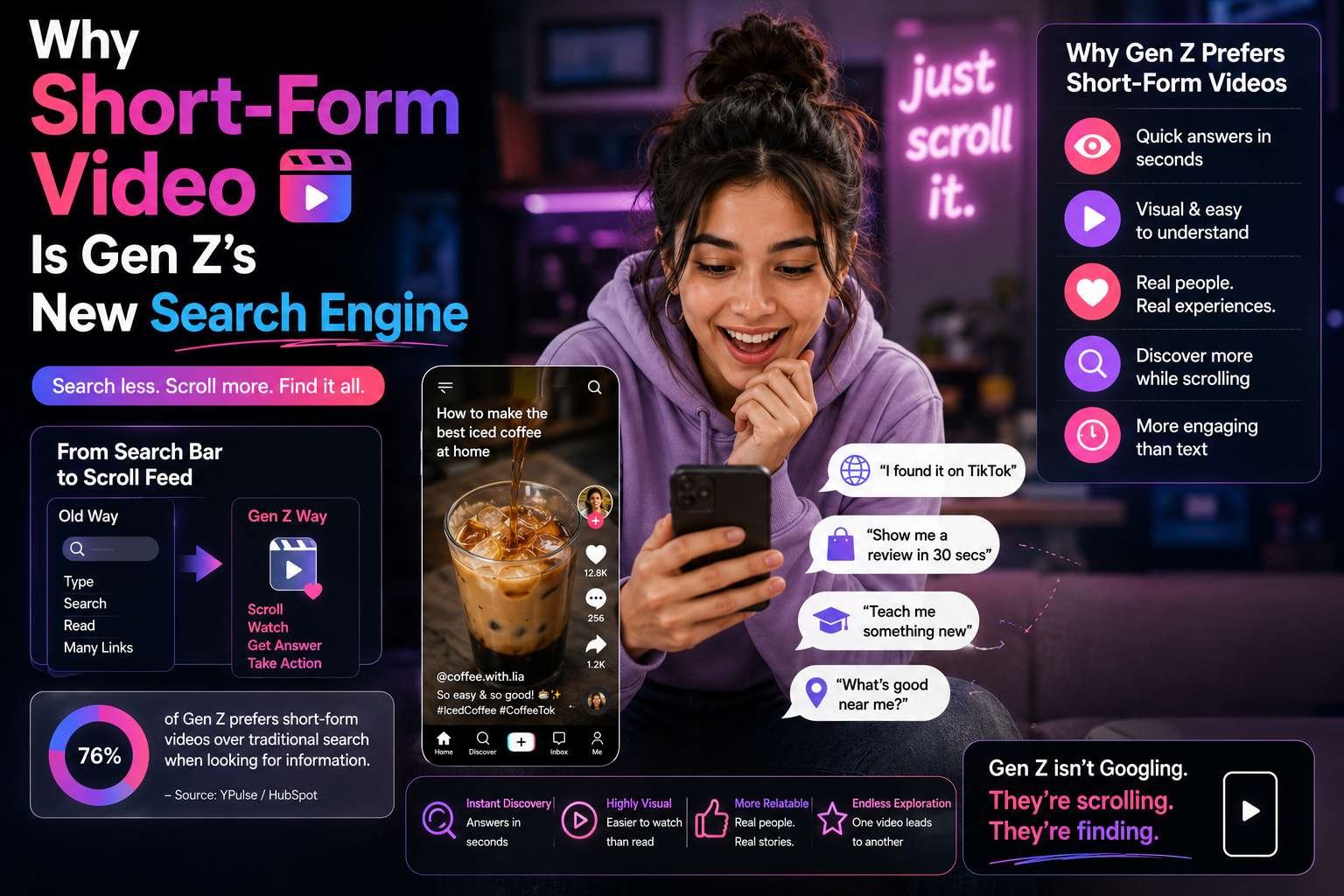
The traditional search box is losing its dominance as Gen Z changes how information is discovered online. Younger internet users are bypassing blue links, heavy text articles, and static web pages in favor of video-first discovery platforms. Short-form video apps like TikTok, Instagram Reels, and YouTube Shorts have effectively evolved into dynamic search engines. By prioritizing immediate visual proof, bite-sized context, and authentic human experiences, these video platforms cater to a generation that values real-world validation over optimized web page copy.
The Migration from Text-Based Queries to Visual Discovery
Traditional search engines require users to type static keywords and read through lengthy web pages to find relevant answers. Gen Z prefers launching searches on platforms that deliver immediate, immersive video responses. Seeing a location, watching a product unboxing, or observing a recipe step-by-step eliminates abstract textual interpretation, making information retrieval feel far more dynamic, engaging, and personal.
Why Modern Audiences Crave Concise Video Context
Text-heavy search results often bundle answers inside fluff-filled articles engineered for search rankings. Short-form video forces creators to deliver value within seconds. Gen Z uses fast, visual explanations to evaluate recommendations quickly, allowing them to gather comprehensive information, compare different options, and learn new skills in a fraction of the time required by traditional blogs.
The Evolution of AI Shopping via Short-Form Content
Short-form video has completely transformed digital retail and consumer behavior. The integration of AI shopping features into social feeds enables frictionless product discovery, where viral trends translate directly into e-commerce checkouts. Algorithmically curated video feeds match users with products tailored to their style, niche interests, and aesthetic preferences, shortening the distance between discovering an item and completing a purchase online.
From Viral Trends to Immediate E-Commerce Conversions
Social feeds act as continuous, real-time product catalogs for younger consumers. When a product goes viral, short-form videos showcase its functionality in diverse real-world scenarios. Integrated shop tags and automated checkout features allow users to purchase featured items directly within the app, removing payment friction and revolutionizing modern retail workflows.
Dynamic Feed Algorithms as Personal Shoppers
Video platform algorithms analyze watch time, replay loops, and comment interactions to interpret user intent. Rather than showing generic banner ads, feeds serve tailored product recommendations that feel like organic content. This personalized delivery transforms casual scrolling sessions into targeted product discovery experiences tailored to each viewer.
How Personalization Drives Visual AI Product Recommendations
Personalization across video platforms goes beyond simple demographic targeting. Automated recommendation systems utilize computer vision, sound processing, and behavioral signals to generate hyper-relevant AI product recommendations within video feeds. By understanding micro-trends and individual taste profiles, these visual networks present items that feel curated by trusted peers rather than impersonal corporate algorithms.
Analyzing Visual Context and Creator Interactions
Advanced recommendation platforms evaluate the visual features of videos alongside caption text and audio tracks. If a user frequently engages with outdoor camping clips or minimal streetwear outfits, the system surfaces videos featuring matching gear. This multi-layered content analysis delivers recommendations aligned directly with lifestyle context.
Micro-Targeting Niche Aesthetics and Subcultures
Gen Z identity is deeply tied to hyper-specific subcultures and micro-aesthetics. Traditional search filters fail to categorize complex styles like “gorpcore” or “coquette decor.” Video recommendation engines excel at recognizing these aesthetic nuances, matching users with micro-brands and specialized products that cater directly to their unique identity markers.
Authenticity and the Power of Unfiltered Social Proof
Skepticism toward polished corporate advertising is higher among Gen Z than any previous demographic. Static search ads and staged product photography are frequently viewed as manipulative. Short-form video provides raw, unfiltered social proof—showing real people testing products under real lighting conditions. This visible authenticity builds immediate credibility that standard text reviews simply cannot replicate.
Real People, Real Lighting, and Genuine Testing
Unlike studio photoshoots that edit out flaws, short-form creator videos reveal true product textures, colors, and performance. Seeing how a clothing item fits a real body type or how a beauty product applies in real-time gives consumers the transparent evidence needed to make confident purchasing decisions without second-guessing quality.
Comment Sections as Community Fact-Checkers
The comment section beneath short-form videos serves as a crowdsourced truth filter. Viewers actively share personal experiences, point out product flaws, or confirm creator claims. Gen Z scans these community discussions alongside the video to verify whether a recommended item is truly worth buying before committing funds.
Visual Search Tools vs. Traditional Keyword Engines
The mechanics of finding information on video platforms have advanced significantly. In-app search bars now utilize predictive text, OCR (optical character recognition), and automated transcription to index video content accurately. Users can search for vague descriptions like “tokyo night food market” and receive hundreds of immersive video tours instantly, surpassing the utility of traditional text indexers.
Indexing Spoken Words, On-Screen Text, and Audio Tracks
Modern video platforms index every element within a post, including auto-generated captions, background audio, and physical objects detected in the frames. This comprehensive indexing allows users to discover hyper-specific moments within a video, making video search as precise and searchable as traditional text databases.
Comparing Location Search: Maps vs. Video Reviews
When searching for restaurants, travel destinations, or local cafes, Gen Z relies heavily on video searches rather than classic map apps. Watching a 15-second clip of a cafe’s ambiance, menu selection, and seating arrangements provides far richer spatial awareness and vibe check than reading written star ratings online.
How Brands Must Adapt Their Content Strategies
As video platforms capture a larger share of search traffic, digital marketing strategies must pivot accordingly. Optimizing exclusively for traditional web engine rankings is no longer enough to reach younger audiences. Brands must embrace creator-led video content, structure product data for visual indexing, and optimize for in-app search algorithms to maintain discoverability across modern social channels.
Creating Search-Optimized Short-Form Content
Search engine optimization now applies directly to short-form video production. Brands must craft clear video titles, spoken keywords, on-screen text overlays, and descriptive captions. Structuring video assets around specific user questions ensures content surfaces prominently when users search within social video platforms.
Partnering with Authentic Micro-Creators
High-budget corporate ads often perform poorly on short-form feeds. Brands achieve better search visibility and engagement by collaborating with genuine micro-creators. Authentic reviews and unboxing clips generated by real users rank higher in platform search results and build far stronger trust with target Gen Z buyers.
The Technical Future of Multi-Modal Video Search
The future of online discovery relies on multi-modal intelligence that blends text, voice, image recognition, and video synthesis into unified search interfaces. As camera hardware, spatial computing, and computational processing continue to advance, searching for information will become an ambient, real-time experience where physical environments and digital video data intersect seamlessly.
Real-Time Camera Search and Object Recognition
Multi-modal search capabilities allow users to point their device camera at any real-world object and pull up relevant short-form videos immediately. Whether identifying a plant species, translating foreign signage, or finding tutorials for a broken appliance, instant camera search eliminates text input entirely.
AI-Synthesized Video Answers and Interactive Clips
Emerging search frameworks will soon generate custom video answers on demand. Rather than stitching together existing clips, generative tools will assemble real-time visual guides tailored to complex prompts, providing step-by-step visual solutions for technical troubleshooting, educational concepts, and DIY projects.
Will Short-Form Video Completely Replace Text Search?
While short-form video has become the preferred discovery tool for lifestyle, culture, and product inspiration, it will not eliminate text search entirely. Complex technical research, academic studies, legal documentation, and rapid navigational queries still require text-heavy platforms. The future search landscape is a hybrid model where text and video tools co-exist based on search intent.
The Strengths of Text vs. Video Search Intent
Text search remains unmatched for high-speed factual lookups, precise data points, and reading long-form documentation. Video search excels at qualitative discovery, aesthetic research, practical demonstrations, and emotional engagement. Users select the search format that best fits the specific goal of their query.
Building a Balanced Digital Discovery Ecosystem
As digital tools mature, successful discovery networks will bridge the gap between text synthesis and visual proof. Platforms that offer text answers supported by real-time video clips give users complete flexibility, providing both analytical data clarity and visual validation within a single unified research workflow.
Frequently Asked Questions
Why does Gen Z prefer short-form video over traditional search engines?
Gen Z prefers short-form video because it provides immediate visual proof, concise context, and authentic human experiences, avoiding the fluff and ad clutter common on traditional text search results.
How do AI product recommendations work on video platforms?
Recommendation algorithms analyze watch time, sound tracks, visual object recognition, and comment engagement to surface tailored product videos matching a user’s aesthetic and lifestyle preferences.
Can short-form video platforms handle complex search queries?
Yes, advanced in-app search tools index spoken audio, on-screen text, captions, and visual elements, allowing users to find detailed tutorials, reviews, and answers to niche questions easily.
How do visual search features improve online shopping?
Visual search tools allow users to search using images or camera feeds, matching real-world items with online inventory and short-form video reviews without requiring text descriptions.
Is short-form video search effective for local business discovery?
Yes, younger users frequently search video platforms for restaurants, cafes, and travel spots to preview real-time ambiance, menu items, and crowd vibes before visiting in person.
Will video search completely replace traditional search engines?
No, video search will co-exist alongside text engines. Video excels at lifestyle, visual, and practical discovery, while text remains ideal for deep technical research and fast factual lookups.